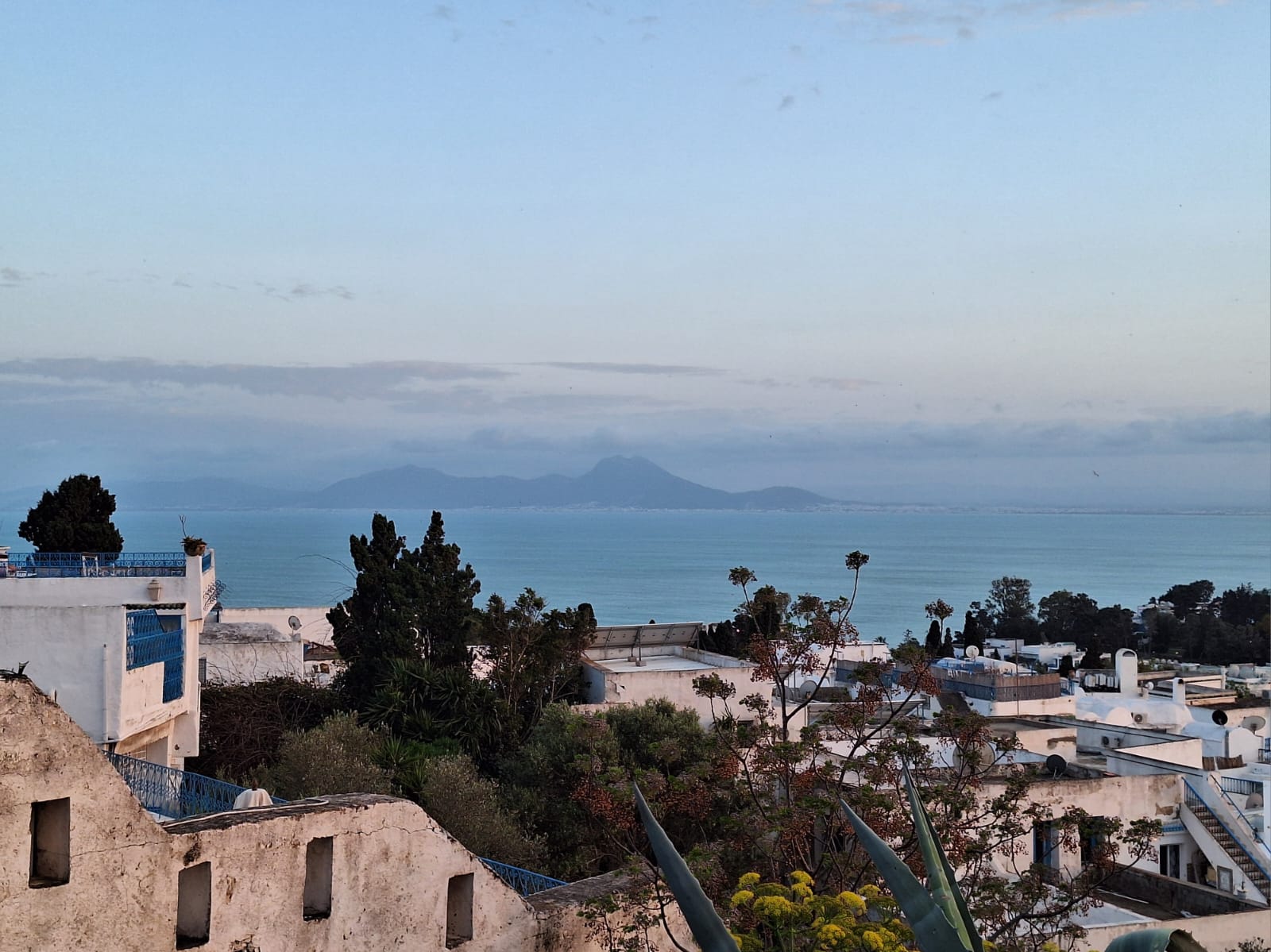
A two-day workshop in Tunis brought together thirty voices to design inspiring narratives and transformative pathways for the Mediterranean Sea. This unique enclosed sea is surrounded by three continents, and its shores are home to many different cultures.
Welcomed by a rainy Tunis, participants stepped into a room whose warmth quickly contrasted with the cold morning outside. Still, their enthusiasm remained untouched by the grey weather, which soon faded from attention as they gathered around one question: What object connects you to the Mediterranean Sea? From an octopus pot to a pinecone, a small hippocampus figure, or a seashell, each “object of attachment” carried a personal story. Smiles spread, eyes lit up with curiosity, and a few laughs broke the ice. Introductions gave way to stories, as participants discovered one another through personal memories and ties to the Mediterranean Sea.
CONTEXT
The Mediterranean Sea workshop was the first in a series of four INSPIRI regional events designed to support the EU’s mission to protect and restore our oceans and waters, while ensuring a sustainable blue economy. These workshops aim to explore how imagination can help shape desirable pathways towards sustainable futures in four regions: the Mediterranean Sea, the Danube, the Bay of Biscay in the Atlantic, and the Baltic Sea.
The Mediterranean Sea stands out from the other case studies as a region where ecological, social and geopolitical tensions converge with particular intensity. Bordered by 22 countries, 10 of them outside the European Union, the Mediterranean Sea has become one of the world’s marine hotspots of global change (Moullec et al., 2019), where climate-related pressures interact with a multitude of stressors, including habitat destruction, biodiversity loss, pollution, overexploitation of marine resources, and the spread of invasive species (Hassoun et al. 2025; Cappelletto et al., 2021). In addition to geopolitical instability in several parts of the basin that increases the vulnerability of the area (MedECC, 2024), coastal urban sprawl and mass tourism development further intensify stress on its marine and coastal ecosystems (Lagarias & Stratigea, 2023). In this context, it is also important to consider the Mediterranean Sea’s importance not only for its ecological value but also for the livelihoods and cultural heritage of coastal populations. Against this backdrop, and in contrast to often paralysing projections, the workshop provided an opportunity to collectively imagine not the likely outcomes of current trends, but the desirable and worthwhile futures we should strive for.
WHO WAS IN THE ROOM
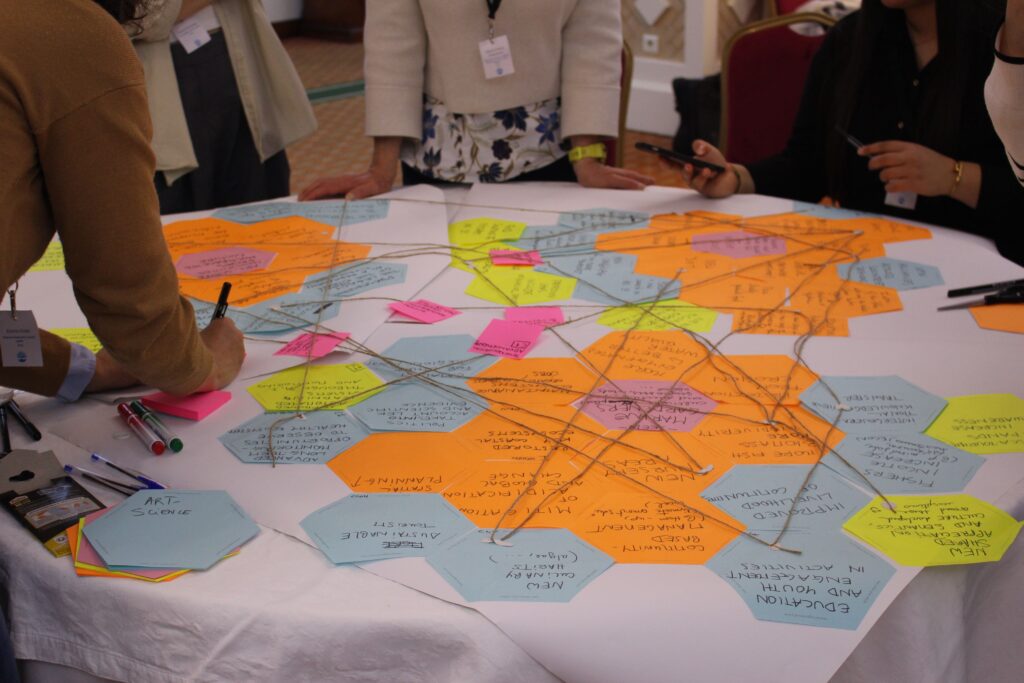
Thirty participants from across the Mediterranean Sea gathered in Tunis for the workshop. From researchers to artists, public sector representatives, civil society organisations, businesses and associations, it brought together a wide range of backgrounds and experiences. This diversity was also both generational and geographical, with voices from all across the Mediterranean basin.
“Participants are coming to the event from all over the Mediterranean Sea, from the Maghreb, the Middle East, Europe, and island countries. Organising this event has been a real challenge, so it is wonderful to see it come to life! We believe it is essential to envision desirable futures across the entire Mediterranean basin while taking regional specifics into account. It is equally important to us to foster fruitful collaboration and promote equity by connecting the participants’ many inspiring initiatives, knowledge and values.”
Adrien Chevallier, Researcher at IRD
THE WORKSHOP IN ACTION — SCIENCE MEETS IMAGINATION
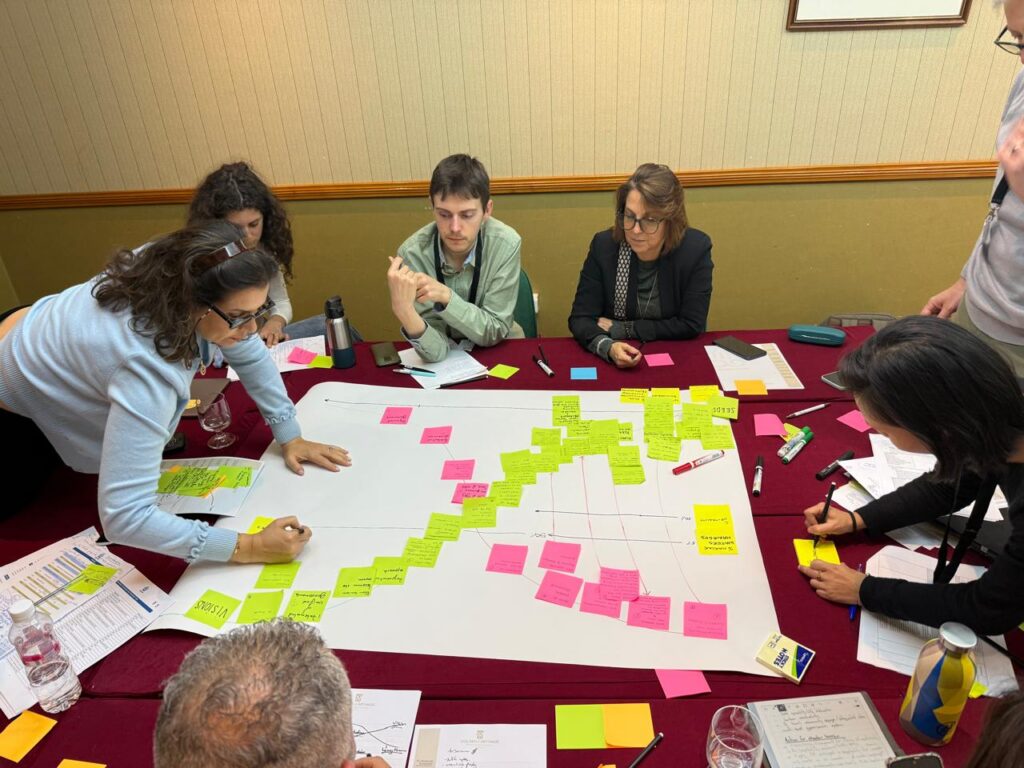
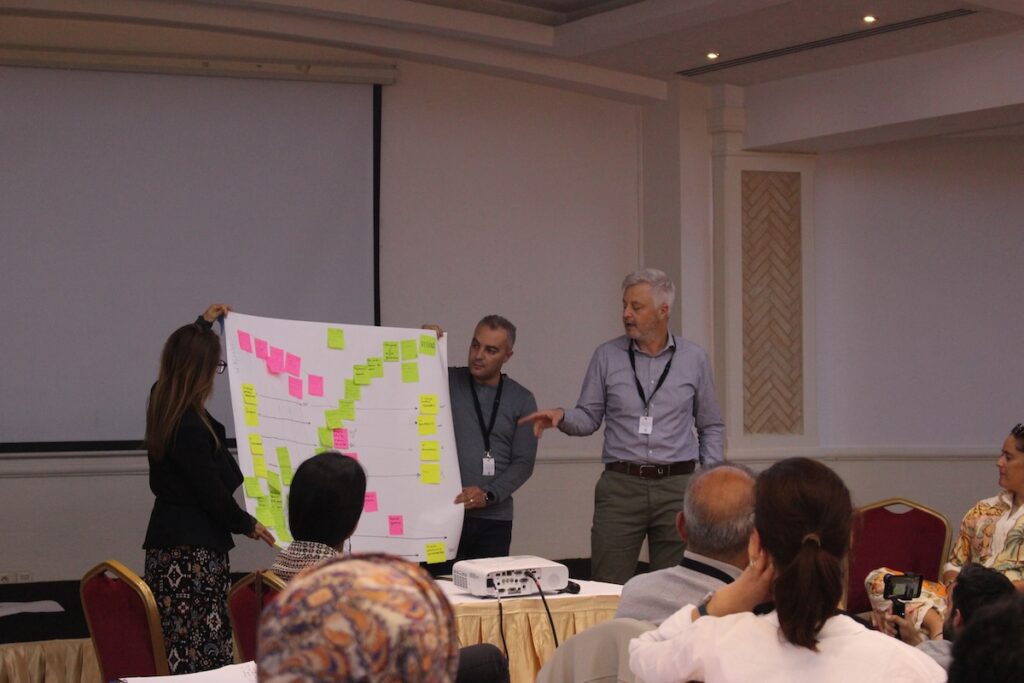
Divided into four groups, participants engaged in activities designed to stretch both their knowledge and imagination. The first day focused on building the visions, the second on creating the pathways to move towards them.
It started with ‘seeds’, participants were invited to explore ripple effects of existing but overlooked initiatives with the potential to shape sustainable future. For instance, some of them had to think of: what if artificial infrastructures become key to restoration and thriving seascapes? What would change first and what would follow if such initiatives spread? Conversations unfolded in layers, where ecological restoration was linked to social behavior shifts, spillover effects, and even greater involvement of artists in restoration processes. Gradually, patterns emerged across the consequences of the different seeds. Groups started to define what a desirable future could look like for them and translated their ideas into creative narratives.
On the second day, attention turned to pathways. Using the X-curve framework, each group mapped what in the present needs to grow and what must decline to reach their vision. What needs to be done, and who should do and support it? What should change, and when? What are the most relevant indicators to track progress towards vision? At times, the different rooms grew quiet with strong focus, at others, it buzzed with more intense debates.
“In conservation, we are always looking for the problems and the solutions, but being part of such a beautiful exchange has enlarged my vision for the future – it was really rich and fruitful. It made me hopeful. Hopefully, we can bring these dreams and hopes to reality.”
Oumeima Baccouche, Secretary General of Notre Grand Bleu
CREATIVITY IN PRACTICE
What if exploring the future of the Mediterranean Sea does not start with trends and projections, but with imagination? What happens when emotions and creativity are given space in these types of discussions?
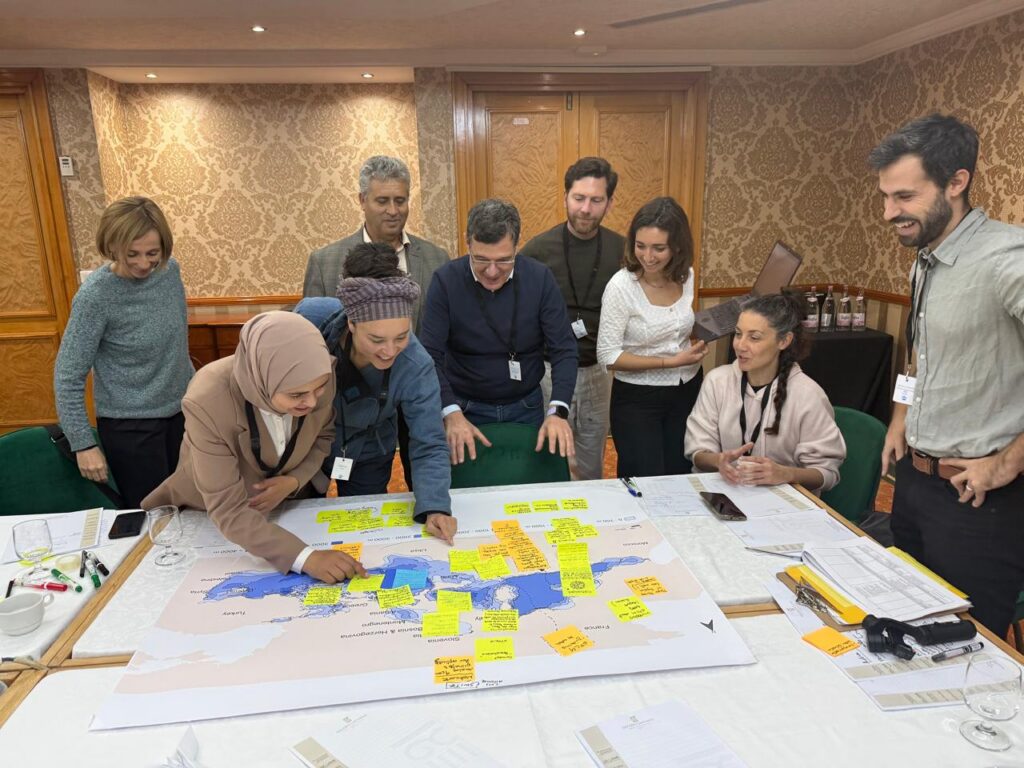
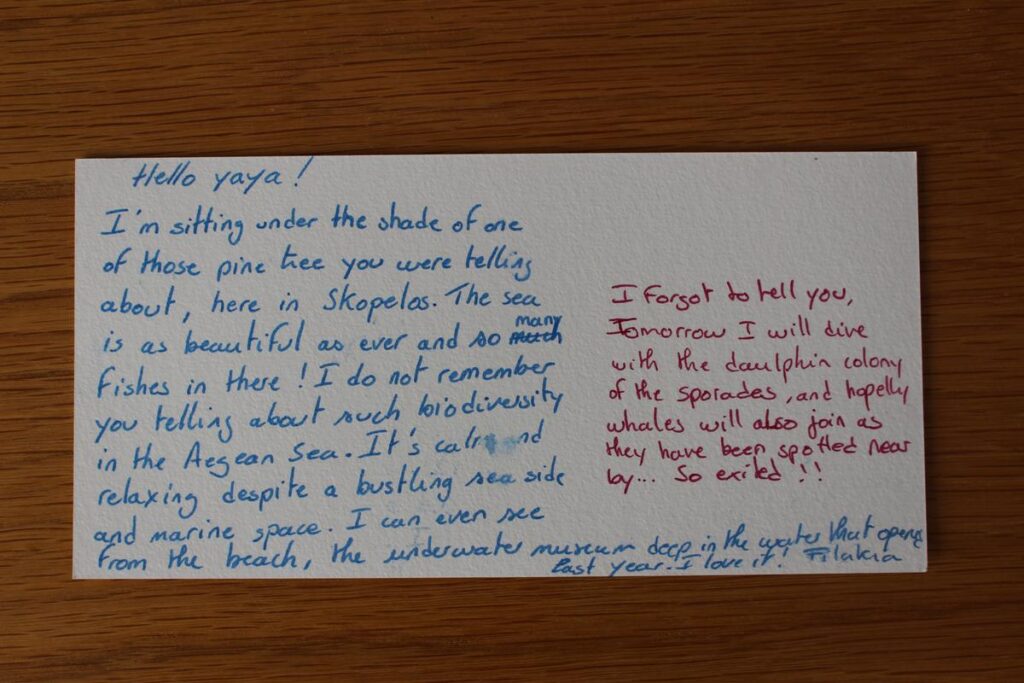
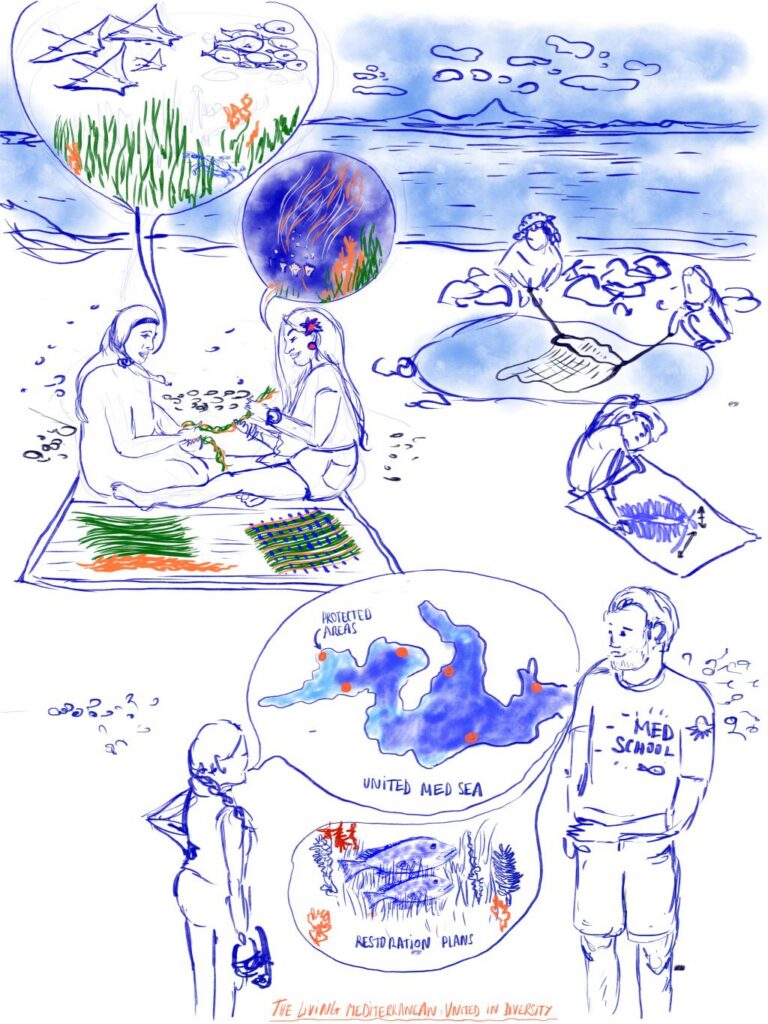
Participants were encouraged to step into a more intuitive and personal space by, for example, sharing what connects them to the Mediterranean and imagining a postcard from a loved one, written to them from the future. In between, participants also exercised collective creativity. Working groups translated their visions into performances. The embodiment of an octopus, the reinterpretation of a groovy hit, and the narration of a story worth telling were some of the formats through which each vision of the future was brought to life. While all of these were taking place, a designer-facilitator live-sketched the discussions to turn some ideas into visual representations. The creative approach in the workshop opened new ways to express complexity, but also to listen differently.
“Creativity allows you to see all these alternative imaginaries, and that is super powerful because if you don’t see it, if you don’t have images to share, you can tell about it but it stays in your mind – but images have the power to be shared. Images are not neutral representations but active forces in shaping imaginaries. Engaging critically with them may help us construct more shared futures for the ocean.”
Elise Rigot, Design researcher at LAAS-CNRS, University of Toulouse
“The entire workshop was very inspiring because I come from a very special, narrow field of science, which means that I have to rely on very empirical data sets for drawing my conclusions. Unfortunately, with overfishing, biodiversity loss, and pollution, the scenarios are pretty much black. The workshop allowed me to get out of the empirical context and gave me the freedom to think about the future we would love to see, and then what do we need to do to achieve it. Thinking out of the box and even letting our imagination go toward the goals we want to achieve could be a vital part in achieving it, actually, because if you do not know where you are going, you cannot have the steps towards this path.”
Andrej A. Gajic, Sharklab ADRIA Research Center, UNEP/MAP Honorary Ambassador, National Geographic
WHAT EMERGED — KEY VISIONS AND INSIGHTS
The visions and pathways developed by the four groups pointed in one direction: the Mediterranean’s future cannot be reduced to a single scenario often shaped by common assumptions, dominant narratives and power dynamics. Instead, the future emerges as plural, it is made of different values, cultures, perspectives and realities.
In one vision, a group envisioned the creation of a Mediterranean Council to enforce laws for the common management of the sea; another imagined a united Mediterranean Sea where artisanal fishing was revalorized and high-tech reserved for offshore research, monitoring, and compliance with protection rules; while for another self- and collective care were the prerequisites for any desirable future to unfold. Together, these visions highlighted the infinite creative and positive possibilities to imagine the futures of the Mediterranean Sea. The next step will be to analyse the commonalities and distinctive elements of each group’s work and better identify the different ideas emerging from the workshop that will feed the next phases of INSPIRI.
LOOKING FORWARD
As this workshop proved, Mediterranean Sea futures cannot be reduced to a single path. The visions and pathways born in Tunis highlight the importance of creating hopeful narratives against dominant negative ones and the role of collective imagination in building alternative desirable futures. These insights will now flow into INSPIRI’s ArtScience community and scientific modeling team and inform the upcoming Transformation Labs, where the ideas will be tested as real-world prototypes for change.
| About INSPIRI INSPIRI (Imaginative Narratives and Scenarios for Inspiring Restoration and Innovation for European Seas and Water Systems) is a Horizon Europe research and innovation project, Grant No. 101213933. inspiriproject.eu | Credits Written by: Juliette Wan-Fat, Ignacio Gianelli, Adrien Chevallier, Tamara Niella Photography: ©INSPIRI Drawing: Elise Rigot Video: Ignacio Gianelli Contact: info-inspiri@zrs-kp.si |